

India’s supply chains are evolving alongside the country’s economic growth. Manufacturing hubs across southern India are producing increasing volumes of automobiles, electronics, engineering goods, pharmaceuticals and industrial equipment, while eastern India continues to play a critical role as a gateway for trade, industrial activity and growing consumer demand.
As cargo flows between these regions increase, businesses are looking for logistics networks that can move freight more efficiently across longer distances. While road transport remains an essential component of India’s logistics ecosystem, rail connectivity is emerging as a key enabler of faster, more reliable and scalable cargo movement.
Today, expanding rail networks and dedicated freight infrastructure are helping create stronger links between production centres, inland markets and ports, reshaping how goods move across the country.
Why India’s Freight Network Is Looking Beyond Roads
India’s freight transportation system remains heavily dependent on road transport. According to NITI Aayog, roads account for approximately 71% of freight movement, while rail accounts for around 18%. This imbalance places significant pressure on road infrastructure as freight demand continues to grow.
For businesses moving cargo over long distances, challenges such as highway congestion, fluctuating transit times and rising transportation requirements can affect overall supply chain efficiency. As a result, companies are increasingly exploring multimodal logistics strategies that make better use of rail for long-haul freight movement.
Recognising this need, Indian Railways’ National Rail Plan aims to increase rail’s share of freight transportation to 45% by 2030, supporting a more balanced and efficient freight ecosystem.
The Growing Importance of South-to-East Cargo Flows
Southern India has emerged as one of the country’s most important manufacturing regions. Automotive production centres, electronics clusters and industrial hubs across Tamil Nadu, Karnataka, Telangana and Andhra Pradesh generate substantial freight volumes destined for domestic and international markets.
At the same time, eastern India serves as an important hub for industrial activity, consumption markets, mineral-based industries, ports and export-import trade. The growing movement of raw materials finished products and containerised cargo between these regions is creating demand for stronger transportation links.
The ability to move cargo seamlessly between manufacturing centres, distribution hubs and trade gateways is becoming increasingly important for supply chain resilience, efficiency and competitiveness.
Rail Corridors Are Creating a New Freight Backbone
To support growing freight demand, India has invested significantly in dedicated rail infrastructure.
The Dedicated Freight Corridor Corporation of India Limited (DFCCIL) has developed dedicated freight corridors designed to separate freight traffic from passenger traffic, improving network efficiency and increasing freight capacity. The fully commissioned Eastern Dedicated Freight Corridor stretches across multiple states and supports the movement of commodities such as coal, steel, cement, food grains and fertilizers.
Dedicated freight infrastructure offers several advantages for cargo movement:
- Higher freight-carrying capacity
- Improved transit reliability
- Greater schedule predictability
- Reduced congestion on existing rail routes
- Stronger connectivity between industrial regions and ports
For cargo owners, these developments help create more dependable supply chains while enabling more efficient movement of goods across large distances.
The Rise of the East Coast Freight Corridor
One of the most significant developments for future freight movement is the proposed East Coast Dedicated Freight Corridor.
Spanning approximately 1,100 kilometres, the corridor is planned to connect Kharagpur in West Bengal and Vijayawada in Andhra Pradesh, strengthening freight connectivity along India’s eastern coastline. The corridor is expected to support cargo streams including coal, iron ore, steel, fertilizers, petroleum products, containers and port-linked freight.
The strategic significance of this corridor extends beyond rail infrastructure alone.
By connecting ports, industrial centres and logistics hubs along the eastern seaboard, the corridor has the potential to improve cargo movement between southern and eastern India while supporting stronger integration between coastal trade routes and inland supply chains.
As freight volumes continue to grow, such corridors could become an important part of India’s long-term logistics strategy.
1. What This Means for Cargo Owners
For manufacturers, exporters, importers and logistics providers, stronger rail connectivity can unlock several operational benefits.
2. Improved Reliability
Dedicated freight infrastructure helps reduce network congestion, making transit schedules more predictable and supporting better inventory planning.
3. Greater Supply Chain Resilience
Multimodal logistics networks provide businesses with additional transportation options, reducing dependence on a single mode of freight movement.
4. Better Capacity Management
Rail allows larger cargo volumes to move efficiently across long distances, supporting growing freight requirements without proportionally increasing road traffic.
5. Sustainability Benefits
Rail freight is generally less carbon-intensive than road transportation, making modal shifts an important consideration for businesses seeking more sustainable logistics solutions.
The Role of Ports in Rail-Linked Logistics
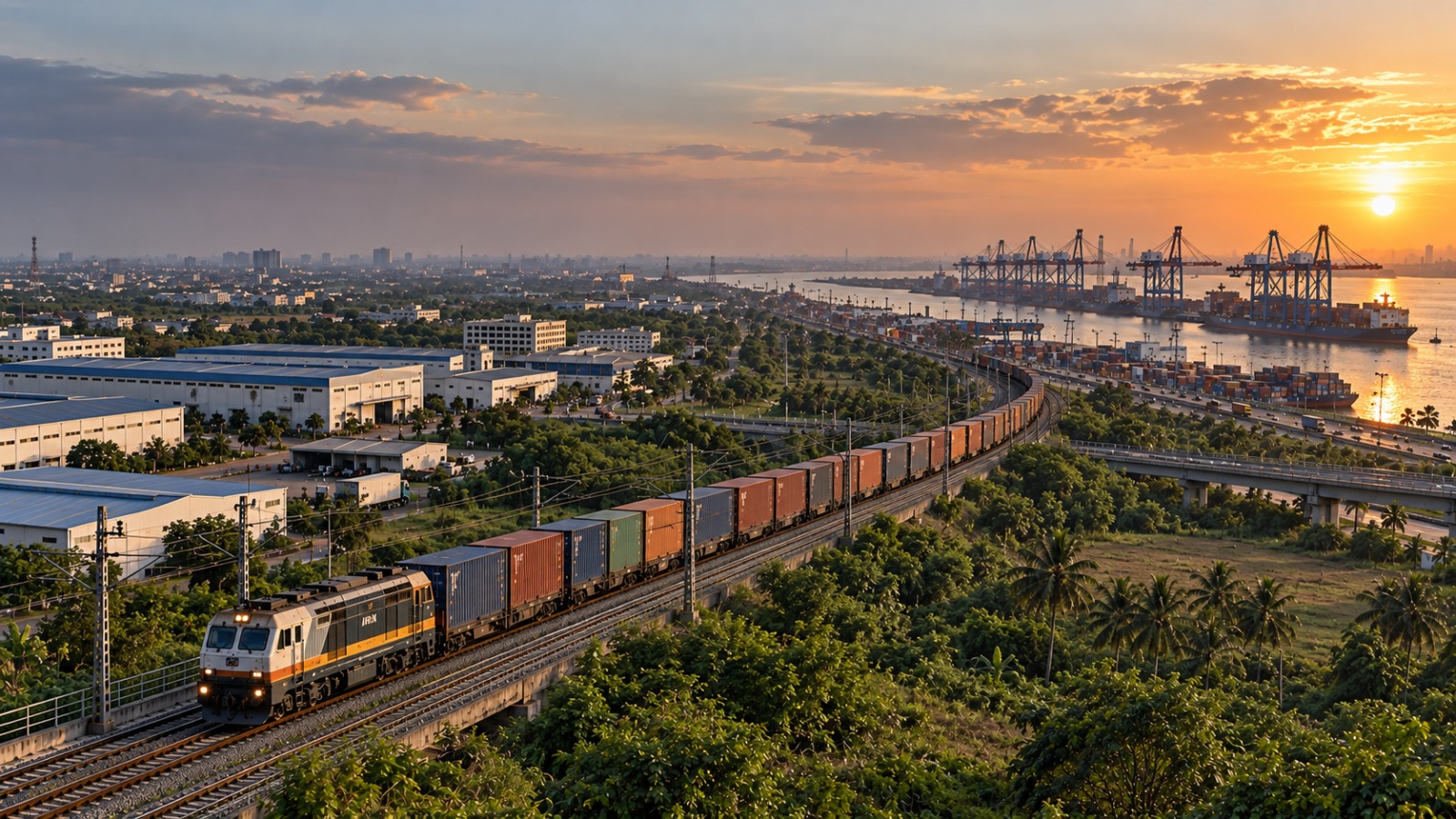
Rail corridors deliver their greatest value when integrated with ports, container freight stations, inland logistics facilities and warehousing infrastructure.
Modern ports are increasingly functioning as logistics hubs rather than simply cargo gateways. Efficient rail connectivity enables faster evacuation of containers, smoother cargo movement to inland destinations and improved coordination across the supply chain.
For businesses, this creates opportunities to optimise transportation routes while improving visibility and efficiency throughout the cargo journey.
PSA Mumbai’s Role in Enabling Integrated Logistics
At PSA Mumbai, connectivity extends beyond the terminal gate. Through integrated logistics capabilities, inland connectivity solutions, customs clearance support and supply chain services, PSA Mumbai helps facilitate efficient cargo movement between ports and inland markets.
As India’s logistics ecosystem continues to evolve, seamless coordination between rail infrastructure, ports, logistics facilities and transportation networks will become increasingly important in supporting trade growth and supply chain performance.
Looking Ahead
India’s logistics future will not be shaped by roads, railways or ports in isolation. It will be shaped by how effectively these systems work together.
The emergence of stronger South-to-East rail connectivity, supported by dedicated freight infrastructure and multimodal logistics networks, is helping create a more connected supply chain landscape. For businesses moving cargo across the country, these developments offer opportunities to improve efficiency, strengthen resilience and build supply chains that are better equipped for future growth.
As freight demand continues to expand, rail-linked logistics networks will play an increasingly important role in connecting India’s manufacturing centres, industrial clusters, ports and markets.
Frequently Asked Questions
1. Why are South-to-East rail corridors important for Indian supply chains?
South-to-East rail corridors strengthen connectivity between manufacturing hubs, industrial centres, ports and consumption markets, enabling more efficient long-distance cargo movement across regions.
2. How do Dedicated Freight Corridors improve cargo transportation?
Dedicated Freight Corridors separate freight traffic from passenger traffic, helping increase capacity, improve transit reliability, reduce congestion and support faster freight movement.
3. What is the East Coast Dedicated Freight Corridor?
The proposed East Coast Dedicated Freight Corridor is a planned 1,100 km freight rail corridor connecting Kharagpur and Vijayawada. It is expected to strengthen cargo movement along India’s eastern coastline and support key industrial and port-linked cargo flows.
4.How can multimodal logistics improve supply chain efficiency?
By integrating rail, road, ports, warehousing and customs clearance services, multimodal logistics helps optimise cargo movement, improve visibility, reduce bottlenecks and create more resilient supply chains.