

Cargo movement is becoming increasingly dependent on the quality and speed of information around it.
Data from the Ministry of Ports, Shipping and Waterways shows that India’s major ports handled 915.17 million tonnes of cargo in FY 2025-26, up 7.06% year on year, while average vessel turnaround time improved to 48.8 hours. Higher volumes and tighter operating windows are increasing the need for terminals to plan, coordinate and respond faster.
This is accelerating digitalisation across container terminals. Terminal operating systems, automated gates, real-time tracking, connected equipment and data-led planning are helping operators manage vessel, yard and gate activities with greater precision and speed.
For cargo owners, the value extends beyond the terminal. Better information can support transport planning, inventory management and more predictable movement across the wider digital supply chain.
From Container Handling to Connected Operations
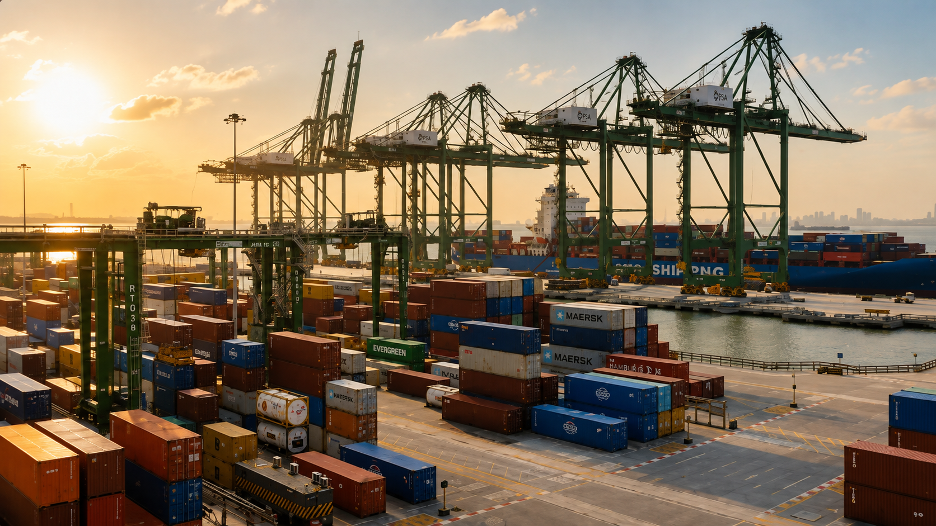
Container terminals coordinate vessel arrivals, berth allocation, crane deployment, yard space, equipment, truck gates and rail movement. These activities are closely linked, which means delays in one area can quickly affect cargo flow elsewhere.
Digital systems help bring these operations onto a common information layer.
Terminal operating systems can connect vessel schedules, container locations, yard capacity and equipment deployment. Digital gate systems can speed up truck processing, while electronic documentation reduces manual handovers between terminals, shipping lines, customs-linked systems and transporters.
This is the foundation of smart ports.
Smart port technology enables terminals to respond faster to changing operating conditions and make better use of available infrastructure. Better yard visibility can reduce unnecessary container moves. Accurate gate information can improve truck flow. More precise vessel data can support berth and crane planning.
For modern maritime logistics, efficient cargo movement increasingly depends on efficient information flow.
Using Data, AI and Automation More Effectively
The next step is using the information generated by terminals to make better operating decisions.
Logistics technology allows teams to monitor yard occupancy, container movement, equipment utilisation and vessel activity in real time. This creates opportunities to identify congestion earlier, deploy resources more effectively and plan maintenance with better information.
AI in logistics can take this further by analysing vessel schedules, historical cargo patterns, yard conditions and equipment availability. These insights can support forecasting, yard planning and resource allocation.
In a large terminal, even small planning improvements matter. Poor container placement can create additional handling moves, while uneven equipment deployment can create delays and idle time. Data analytics, AI and automation help operators make these decisions with greater consistency and accuracy.
An automated container terminal may use sensors, digital control systems and automated or semi-automated equipment across gates, yards or cargo-handling processes.
Automation is most effective when it addresses practical operating requirements. In container terminals, this can include improving yard discipline, reducing bottlenecks, supporting equipment utilisation and enabling more consistent cargo movement through the terminal.
Connecting the Terminal with the Wider Supply Chain
A container’s journey rarely ends at the port gate.
Cargo may move between factories, container freight stations, warehouses, rail terminals and inland destinations. Each transition depends on timely information between multiple stakeholders.
This makes the digital supply chain an important part of terminal transformation.
When cargo availability and terminal information are visible earlier, transporters can schedule pick-ups more accurately, rail movements can be coordinated, and warehouses can prepare for incoming cargo. Better planning can reduce avoidable delays and help cargo owners make more informed decisions across transportation, warehousing and inventory management.
The value of digitalisation therefore grows when information connects different parts of the logistics network, creating stronger links between terminals and the wider supply chain.
Looking Ahead
Container terminals are being asked to handle growing trade volumes with greater speed, visibility and predictability.
Digitalisation is helping terminals meet these expectations by connecting vessel, yard, equipment, gate and inland operations through a common information layer. Smart ports, AI, automation and integrated digital platforms are improving how infrastructure is managed and how cargo moves through the supply chain.
The next stage of terminal evolution will depend on how effectively information flows across the wider logistics ecosystem.
For container terminals, technology is becoming as important to cargo movement as the physical infrastructure that supports it.
Frequently Asked Questions
1. What is a smart port?
A smart port uses connected digital systems and operational data to improve cargo visibility, planning, resource utilisation and terminal efficiency.
2. How is AI being used in logistics?
AI in logistics can support forecasting, yard planning, equipment allocation and congestion management by analysing operational data and identifying patterns.
3. What is an automated container terminal?
An automated container terminal uses digital control systems, sensors and automated or semi-automated equipment to improve cargo handling, productivity and safety.
4. Why is the digital supply chain important?
A digital supply chain improves information sharing between ports, transporters, warehouses, cargo owners and other stakeholders, allowing cargo movement to be planned more effectively.
5. What is smart port technology?
Smart port technology includes terminal operating systems, digital gates, connected equipment, cargo-tracking systems, automation, AI and data analytics used to improve terminal operations.
6. How is PSA India supporting digital transformation?
PSA India is strengthening the use of digital technologies across terminal operations to improve planning, visibility and operational responsiveness. At PSA Mumbai, PSA’s Global Terminal Operating System supports activities such as berth planning, yard allocation, equipment scheduling and real-time monitoring. By combining operational data with technology-enabled decision-making, PSA India continues to support more efficient and predictable cargo movement through its terminals.