The inauguration of PSA Mumbai’s Phase 2 marks a defining moment in India’s port infrastructure
The inauguration of PSA Mumbai’s Phase 2 marks a defining moment in India’s port infrastructure, establishing the nation’s largest and most advanced container terminal. With its annual capacity now doubled to 4.8 million TEUs, PSA Mumbai’s expansion is an exemplar for operational scale, multimodal connectivity, and sustainable trade practices. This has been made possible by Singapore’s largest foreign direct investment (FDI) in the port sector in India to date, reflecting the enduring partnership and shared ambitions between the two nations. The latest development enhances the terminal’s ability to handle increased cargo volumes and strengthens India’s position in the global maritime supply chain network, thereby supporting the country’s growing trade demands.
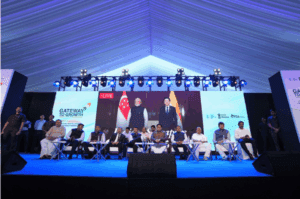
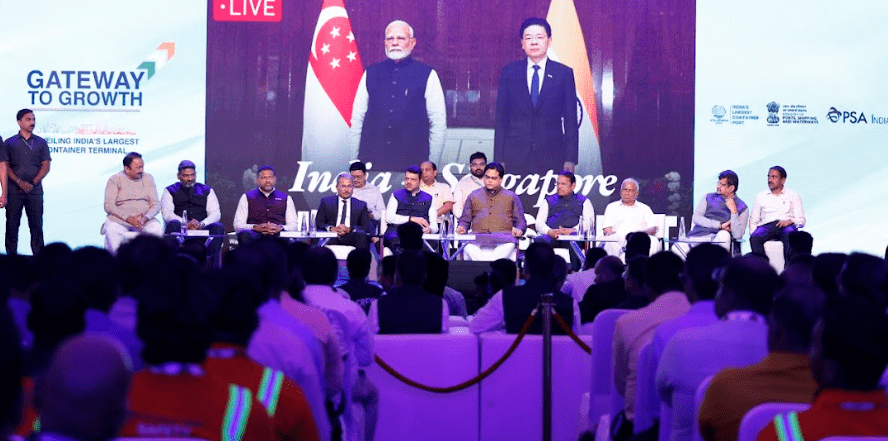
The inauguration ceremony itself symbolised the collaborative nature and strategic importance of the expansion. The event began with a welcome address by Shri Unmesh Sharad Wagh, IRS, Chairman of the Jawaharlal Nehru Port Authority, followed by the virtual inauguration by the Prime Ministers of India and Singapore. A joint video presentation from JNPA and PSA India showcased the terminal’s advancements and future plans. This was followed by an address from the Chief Minister of Maharashtra, Devendra Fadnavis, with the proceedings concluding with a vote of thanks from PSA. The ceremonial unveiling of the new berths marked the formal completion of the expansion phase, revealing the state-of-the-art infrastructure now operational at the terminal.
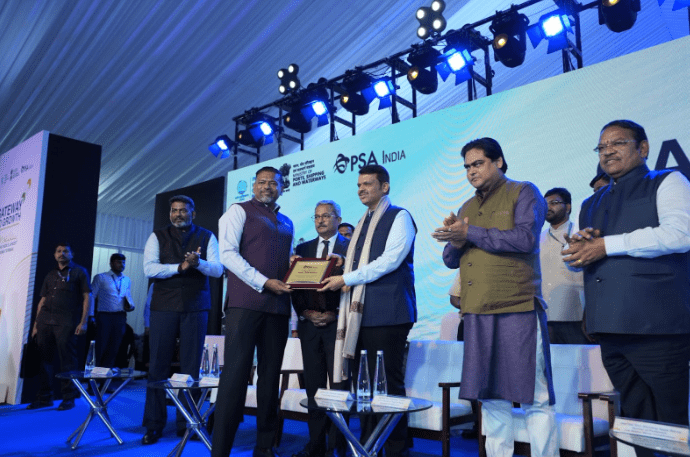
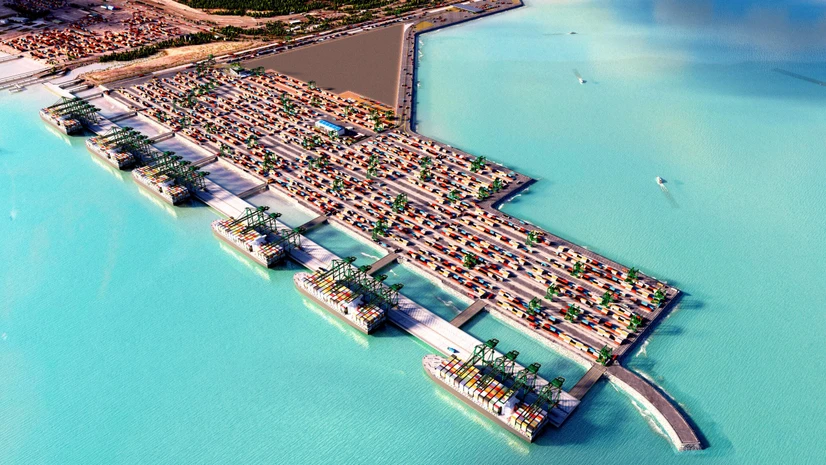
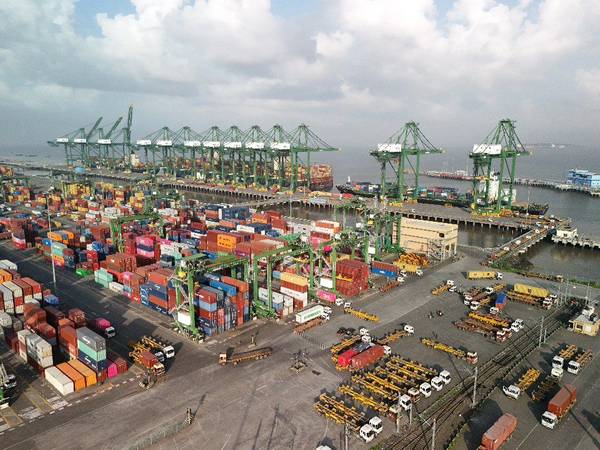
Phase 2 is a major step forward, spurred by PSA’s $1.3 billion investment. The initiative has enabled the terminal to simultaneously accommodate multiple ultra-large container vessels, substantially boosting operational capacity and efficiency. The expanded facility now features 24 quay cranes (double the previous number) 72 advanced rubber-tyred gantry cranes, and 8 rail-mounted gantry cranes, enhancing high-volume cargo handling and optimising vessel turnaround. Complementing this is a 200-hectare increase in yard space and multimodal infrastructure that integrates road and rail networks, establishing an operational framework designed to meet both current demands and future growth objectives.
PSA Mumbai’s Phase 2 expansion is strategically very important. Central to its operational capabilities is its integration with the Western Dedicated Freight Corridor (DFC), India’s flagship infrastructure project aimed at revamping freight movement. With six DFC-compatible rail tracks embedded within the terminal’s design, the facility is directly connected to over 63 Inland Container Depots (ICDs), the widest such network supported by any terminal in India. This offers exporters and manufacturers the much-needed reach to both international shipping lanes and domestic markets.
The integration also aligns with the government’s PM Gati Shakti vision, an initiative aimed at creating efficient and synergistic multimodal transport networks nationwide. By efficiently linking road, rail, and sea modes, PSA Mumbai enables faster cargo turnaround, reduces logistics costs, and enhances the reliability of its supply chains. These benefits translate into tangible competitive advantages for importers and exporters operating in India’s trade environment.
In addition to expanding physical infrastructure, the project prioritises sustainability and digitalisation as core operational principles. PSA Mumbai now meets its majority electricity demand through renewable sources, predominantly solar and wind power,making it India’s first 100% energy-powered terminal. It has also implemented smart yard planning and real-time cargo visibility tools that enhance efficiency and reduce turnaround times. Customer interfaces are regularly enhanced for real-time updates and seamless digital documentation. The shift to electrified equipment further demonstrates PSA’s commitment to sustainability, while data-driven systems support safer, more efficient logistics.
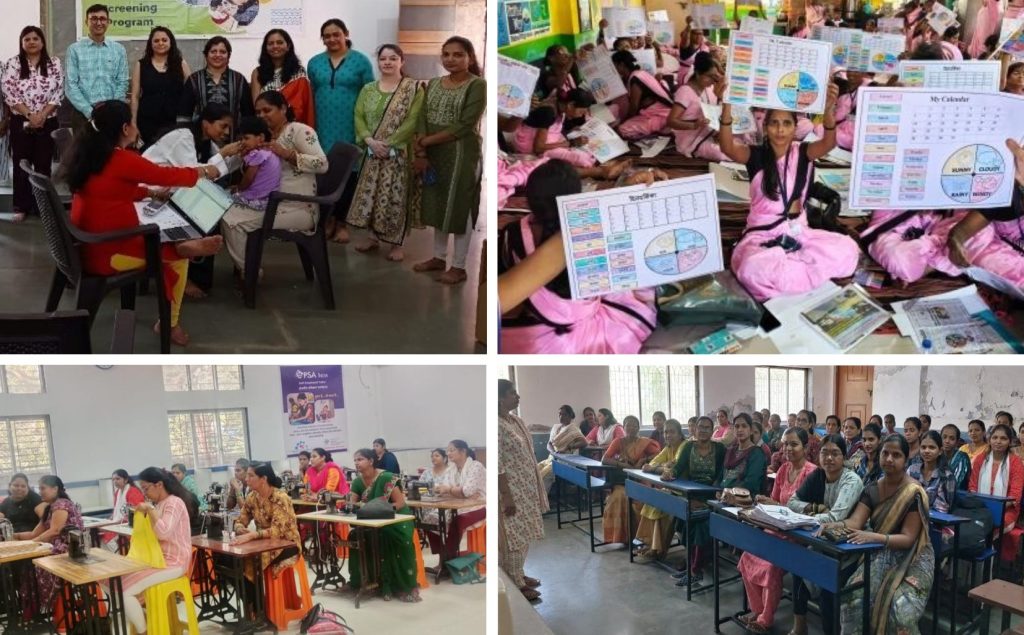
In addition to its focus on infrastructure and sustainability, the project places strong emphasis on workforce development and community impact. Phase 2 has generated over 1,500 skilled jobs in technical, supervisory, and administrative roles, and is supported by comprehensive training initiatives in partnership with local institutions. These investments deliver long-term socio-economic benefits, build sector expertise, and strengthen India’s maritime and logistics sectors.
The success of PSA Mumbai’s expansion also opens up the next frontier: how India can use ports not just to move goods, but to anchor industrial clusters, logistics parks, and manufacturing exports around them. With world-class terminals feeding into industrial corridors and rail networks, the country can unlock a new wave of economic geography where ports don’t just serve trade, but actively shape it. PSA Mumbai’s Phase 2 is a first step in that larger transformation.